Research
The 50 States of AI
Fifty States of AI is the first comprehensive analysis of all 34 published state K–12 AI guidance documents, mapping what states have produced, the gaps they share, and a practical roadmap for closing them.
In our research, nearly every administrator and teacher told us they need the same three things: coherent district and school policy, school implementation support, and ongoing professional development.
The Diagnostic is a structured read of your district’s AI readiness, ending in a written report with a prioritized roadmap you own.
1. A hands-on readiness review across policy, capacity, equity, professional learning, and evaluation. 2. Facilitated working sessions with your leadership team, plus a written report. 3. A prioritized roadmap that names your top two or three gaps and what to do about them.
Start the readiness diagnostic →We work with superintendents, principals, and teachers to build a coherent, age-appropriate, equitable policy.
1. A layered, age-appropriate approach: what fits a fifth grader isn’t what fits a senior, and your guidance should say so. 2. Policy your staff can act on: guidance that describes what good practice looks like, not just what’s forbidden. 3. A rollout people adopt: aligned professional learning, family communication, and a realistic implementation plan.
Request a school partnership →Our workshops provide practical, subject-specific sessions grounded in our framework.
1. Subject-specific prompting and lesson design for ELA, math, science, and social studies, built around your standards. 2. Assignments that hold up in an AI world, redesigned so AI deepens student thinking instead of doing it for them. 3. Clear guardrails for student use, rubrics and disclosure templates you can apply consistently across a class.
Browse professional development programs →AI only serves learning when a whole system is pulling in the same direction. STEP is how we make that happen: one shared intent that holds as it moves from district policy, to each school, to teachers, to students, with room for professional judgment at every level.
Start with coherent, district-level AI policy & guidance that describes what good practice looks like, not just what's banned.
Translate that policy into each school's reality so it is age appropriate, workable for staff and owned by the school leaders.
Give teachers practical, subject-specific professional learning and classroom-ready tools.
Help students use AI to strengthen their own thinking and grow into critical, responsible users.
AI should deepen student thinking, never substitute for it. We help schools use it to strengthen learning, not shortcut it.
Teachers are experts and partners. We respect their judgment and aim to make their jobs more workable, not add to the pile.
Privacy, data protection, bias, and fair access are the first questions we ask of any tool or policy.
AI will either widen the opportunity gap or close it.
We ground our work in research and in what educators actually tell us, not vendor marketing.
We don't sell a platform or take money to recommend one. Our only loyalty is to good practice and your students.
Five questions. Three minutes.

I’ve long believed what the Supreme Court affirmed in Brown v. Board of Education, that education “is a right which must be made available to all on equal terms.” The rise of AI in education feels to me less like a new subject than the newest test of that very old promise.
I spent over a decade in federal and state government, first as a legislative aide to U.S. Senator John Chafee and later as Policy Director at the Hunt Institute for Educational Leadership and Policy under former North Carolina Governor James B. Hunt Jr., working with governors and legislators nationwide to strengthen state and local education systems. Today I’m a Teaching Professor at Northeastern University’s Graduate School of Education, where I work with doctoral students leading change in their own schools and districts. My research focuses on education policy and the responsible integration of AI in schools, including my current paper Fifty States of AI and my recent book Essentials of Education Policy (Routledge, 2025).
That same conviction led me to co-found AI Education Infusion. AI won’t close the opportunity gap on its own; that depends on the teachers and leaders who decide how it’s used.
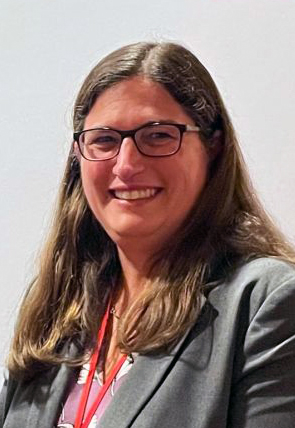
From an early age, I’ve had a passion for teaching and a love for learning. As an educator, I’m fascinated by the different ways people learn and what truly excites them. Maybe I was ahead of the curve in following Ted Lasso’s advice to “be curious, not judgmental.”
Throughout my career, I’ve worked with individuals of all ages, as a K–12 classroom teacher, faculty member, higher education administrator, and career and leadership coach to facilitate deep learning about who they are, where they want to go, and what it takes to get there. Today, I serve as Associate Dean of Faculty Affairs in the College of Professional Studies at Northeastern University, and I hold a Ph.D. in Education from the University of North Carolina at Chapel Hill. My work has centered on doctoral education, faculty development, and social-justice-oriented change, including directing Northeastern’s Doctor of Education program through a redesign named 2022 Program of the Year by the Carnegie Project on the Education Doctorate.
That same curiosity is what drew me to my most recent work: co-founding AI Education Infusion, a nonprofit dedicated to ensuring every educator has the knowledge, tools, and confidence to teach in an AI-integrated world. AI will either widen the opportunity gap in education or help close it, and I believe the answer lies where it always has, with the teachers, leaders, and learners doing the work.

Judith Rizzo became the first executive director and CEO of the James B. Hunt, Jr. Institute for Educational Leadership and Policy in 2002. Dr. Rizzo is responsible for growing the Hunt Institute into a national resource for governors, legislators, and other political, business, and education leaders, supporting their development and implementation of effective education policies and programs. Prior to the Hunt Institute, Dr. Rizzo served as Deputy Chancellor for instruction for the New York City Public Schools. During her career Dr. Rizzo has been a teacher, supervisor, director of professional development, principal, deputy superintendent, and led the court ordered programmatic implementation of the desegregation effort in Boston, MA.
We collect data from teachers, leaders, and students, and translate it for the people writing policy.
Fifty States of AI is the first comprehensive analysis of all 34 published state K–12 AI guidance documents, mapping what states have produced, the gaps they share, and a practical roadmap for closing them.
A meta-review of 62 classroom studies, 2023–2025.
An analysis of 220 district policies, with 12 model excerpts.
Tell us a little about your context, and let's find a time to talk.
Most partnerships start with an AI Readiness Diagnostic, a comprehensive, data-driven read of where your district stands across policy, capacity, equity, professional learning, and evaluation, with a clear roadmap you own.
We partner directly with school districts, state agencies, and educational foundations. To discuss a potential partnership, diagnostic, or professional learning engagement, please reach out to us directly: